12th April

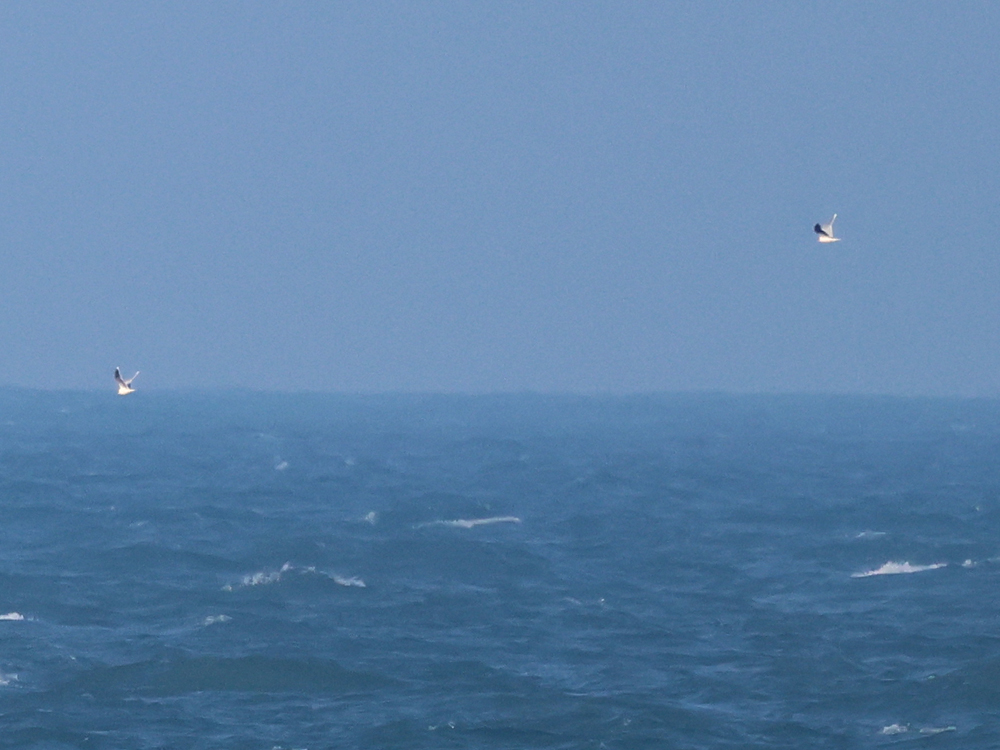
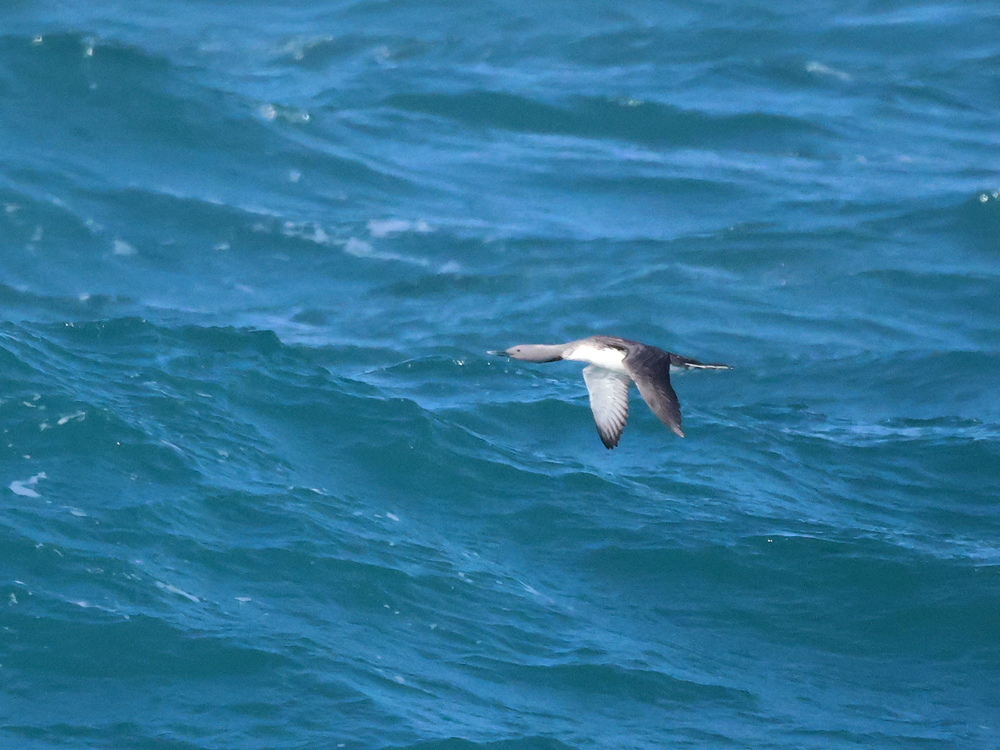
Another bout of wild weather thrown at us today, with a 60mph westerly gale accompanied by frequent heavy showers and eventually a longer spell of rain - utterly grim! There were a scatter of grounded migrants about including 20 Blackcaps and a Black Redstart at the Bill, the year's first Swift passed over at Southwell, a trickle of Manx Shearwaters, a Red-throated Diver and an Arctic Tern passed though off the Bill and 62 Sandwich Terns and a Whimbrel passed through at Ferrybridge.

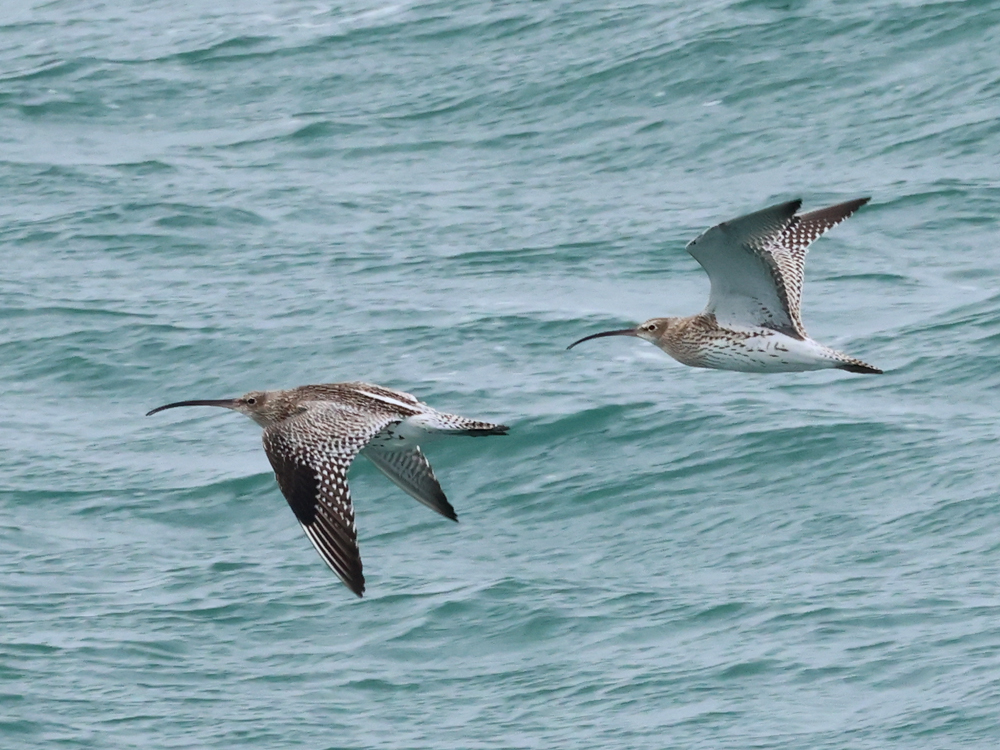
The Whimbrel through at Ferrybridge this morning © Pete Saunders:


11th April

A decent enough morning gave way to a shocker of an afternoon today, with heavy rain setting in and lasting for the rest of the daylight hours. A fair little arrival on the ground at dawn included 50 Blackcaps and 20 Willow Warblers at the Bill and 10 Wheatears at Ferrybridge, with singles of Little Ringed Plover over the Bill, Black Redstart at Reap Lane and a Ring Ouzel at Watery Lane the best of the less frequents; the Hoopoe in the Weston Street area also showed again, whilst the year's first Whitethroat was at Wakeham. Despite the constantly freshening wind the sea was uneventful, with a constant trickle of Manx Shearwaters, 5 Red-throated Divers and 2 Arctic Skuas the best on offer at the Bill. The day's only other reports were of 2 Mute Swans and 2 Grey Plovers at Ferrybridge.

Also today, belated news received from a visiting birder of a Hoopoe at Tout Quarry on 30th March.

10th April

In the face of a poor weather forecast many visiting birders eschewed the chance of another day in the field and ended up missing out on easily the best passerine arrival of the spring - all dropped, rather ironically, by the very weather that had put everyone off; the almost night-long rainfall ended up lasting a couple of hours into the morning, but once it had cleared the south of the island was veritably jumping with new arrivals. Sadly, coverage was woefully inadequate to glean a full picture of what was going on but 50-100 totals each of Blackcap, Chiffchaff and Willow Warbler around the Obs, 100 or more phylloscs at Avalanche Road and 80 Wheatears and 8 Yellow Wagtails at Reap Lane were snippets that hinted at some decent totals of these and other arrivals. No particular oddities were unearthed, but 2 Grasshopper Warblers and the season's first Reed and Sedge Warblers were of note; the Hoopoe at Weston Street also put in another appearance. The ever-strengthening wind ensured the sea got good looks but the rewards were fewer than in recent days, with 9 Red-throated Divers, 2 Arctic Skuas and a Garganey the best off the Bill; terns off Chesil and in Portland Harbour included 7 Arctics at the latter. 


9th April

The beginning of the end of our interlude of fair weather saw a relatively poor return from the land but a very varied sea passage and some quality overhead. A Common Crane over Weston was the day's highlight, with a strong back-up in the form of the Cirl Bunting again overhead at the Bill, a Red Kite also overhead, a brief Serin dropping in at the Obs and firsts for the year in the form Common Sandpiper, Great Skua, Little Tern (2) and Redpoll from the Chesil seawatching; there was also a report of the Hoopoe seen briefly again at New Ground. Grounded numbers were largely inconsequential, with the total of just 20 Willow Warblers at the Bill adequately reflecting the dearth of commoner migrants everywhere, with 2 Black Redstarts about as good as it got for oddities; what were poor conditions for dropping migrants proved to be better for diurnal fare, with a steady if unspectacular passage of most of the early April regulars, amongst which single figure totals of White Wagtail, Yellow Wagtail and Tree Pipit were of interest. The easterly breeze resulted in a strong showing from the sea, with Common Scoter easily exceeding 200 and commic terns just getting past 100; 9 Arctic Skuas, 8 Red-throated Divers, 8 Curlew, 7 Little Gulls, 3 Teal, 6 Sanderling and a Grey Plover provided further interest, mainly off Chesil.

The Red Kite over the Bill © Martin Cade...


...and a few of the Common Scoter passing the Bill © Mike Trew:


The scoters aside, it was one of those rubbish days for seawatch record shots: horrible harsh light, hazy, everything miles away etc etc - all the usual excuses churned out as to excuse your already lousy abilities; these were two of the Little Gulls passing the Bill © Martin Cade:

8th April

For anyone who's a fan of Hoopoes and Common Scoter today was a good day to be alive: a rash of the former provided their customary touch of the exotic, whilst a rush of the latter provided plenty of opportunities to dip into one of the most exciting migration spectacles on offer at Portland. Three Hoopoes - the lingering individual at Weston Street and newcomers at Southwell and New Ground - might seem a tad greedy for one island but were welcome nonetheless and the final tally of almost a round 1000 Common Scoter constituted one of their higher day-totals of recent years. Quality back-ups were available but tricky to latch on to, with a Cirl Bunting bombing about over the Bill during the morning and a Serin passing straight through there during the afternoon. The day's grounded migrant selection was limited in both number and variety, with the odd few Redstarts, 2 Ring Ouzels and singles of Black Redstart and Firecrest the best unearthed; it was busier overhead although singles of Osprey and Short-eared Owl were the only out of the ordinaries amongst the routine hirundines, Meadow Pipits, finches and the like. The scoters aside, variety from the sea included 32 Bar-tailed Godwits, 6 Shoveler, 5 Arctic Terns, 4 Red-throated Divers, 2 each of Arctic Skua and Arctic Tern, a Yellow-legged Gull and a Little Ringed Plover.

Although mostly rather elusive and skittish the Hoopoe at New Ground did show nicely on occasions © Geoff Orton:


7th April

A distinct upping of the ante today, with a nice spread of arrivals that were enjoyed in unbroken sunshine and increasing warmth. The pick of the newcomers was a Cirl Bunting that dropped in for a short while at the Bill; the lingering Hoopoe at Weston Street finally gave itself up to passing birders and afterwards showed from time to time, an Osprey passed through Portland Harbour and a good total of 10 Common Buzzards were overhead at Easton, whilst the day's less common migrants included well into double figures of Redstarts, 3 Pied Flycatchers and 2 each of White Wagtail and Ring Ouzel. Two Ruddy Shelducks over Ferrybridge would also have been popular but seemingly didn't linger. At the Bill, the northeasterly breeze was just fresh enough to drop 120 Willow Warblers - their best arrival of the season to date, whilst passing hirundines also racked up respectable tallies with Swallow likely getting well into a four figure total. Sea passage hardly featured, with 10 Red-throated Divers the best of it off the Bill; up to five Mute Swans wandering between the Bill and Ferrybridge were a local oddity.

Butterfly and moth interest included multiples of both Clouded Yellow and Hummingbird Hawkmoth.

The Hoopoe that's been visiting a private garden at Weston Street made occasional random appearances in front of passing birders today © Nicolas Jones...


...and by the lazy expedient of sitting in our car overlooking the area towards last light we managed to get in on the viewing of it when it dropped onto the path into Coombefield Quarry for a little while © Martin Cade:


The occasional Cirl Bunting is a sight we've begun to grown accustomed to in recent years but the sound of one in song on the island is something that's certainly new for this century © Martin Cade:


A few of the day's more routine migrants - Pied Flycatcher © Steve Mansfield, Wheatear © Geoff Orton and Redstart & Willow Warbler © Martin Cade:


6th April

A very quiet day for anything other passing Swallows that made the most of the return of sunny skies and were rattling through along West Cliffs at 150-200 an hour at times; an Osprey also passed through over the Verne whilst a Hoopoe again made an early morning visit to a private garden at Weston. Grounded arrivals were really thinly spread and included nothing of consequence beyond single Firecrests at Thumb Lane and Avalanche Road. The offshore breeze saw to it that sea passage was almost non-existent.

5th April

Today's prompt discovery of a Hoopoe at Tout Quarry added some much needed impetus to proceedings even if it didn't oblige by almost immediately disappearing into the ether; after dark it also transpired via news from a member of the public that a second individual has been visiting a private garden at Weston both today and yesterday. Through the morning the common migrant situation was also looking positive, with a good scatter of phylloscs and Blackcaps at the Bill where 2 Goldcrests, 2 lingering Firecrests and singles of Short-eared Owl, Great Spotted Woodpecker and a Redstart added some nice variety on the ground, whilst overhead multiple Grey Herons, 2 Siskins and a Canada Goose were amongst the trickle of incoming hirundines; elsewhere, an early Garden Warbler - together with another Redstart - was at Sweethill, a Ring Ouzel was watched ascending at speed out of Tout Quarry during the Hoopoe hunt and a Merlin arrived in off at Chesil. The sea was a little disappointing: the Red-throated Diver tally again exceeded 30 and Common Gulls were passing in some numbers but, aside from a settled Slavonian Grebe off Chesil and an Arctic Skua through off the Bill, there was little else on the move. Sadly, this early promise evaporated as the forecast rain rolled in quicker than expected and precluded any really meaningful fieldwork after midday.


4th April

It was a lovely day to be out birding and some pretty comprehensive fieldwork revealed by far the most varied selection of migrants to date, with plenty to see on the ground, over the sea and overhead. On the ground Redstart (singles at the Bill, Sweethill and the Verne) and Grasshopper Warbler (in a private garden at Southwell) were firsts for the year and the pick of a fair arrival otherwise dominated by the two phylloscs that were reported to be particularly numerous around the north of the island; at least 4 lingering Firecrests, a Snipe and a White Wagtail were also of note. Overhead, 2 Reed Buntings were also new for the year, with Sand Martin, Swallow and Linnet all reaching three figure totals amongst the day-long trickle of other arrivals. Variety was the chief reward from the sea: the Common Scoter tally reached 200, with the wader selection off Chesil including 9 Dunlin, 3 Grey Plover, 2 Sanderling and singles of Little Ringed Plover and Knot, whilst the Bill chipped in with, amongst others, 19 Red-throated and a single Black-throated Diver, 3 Arctic Skuas and 2 each of Shoveler, Red-breasted Merganser and Arctic Tern.

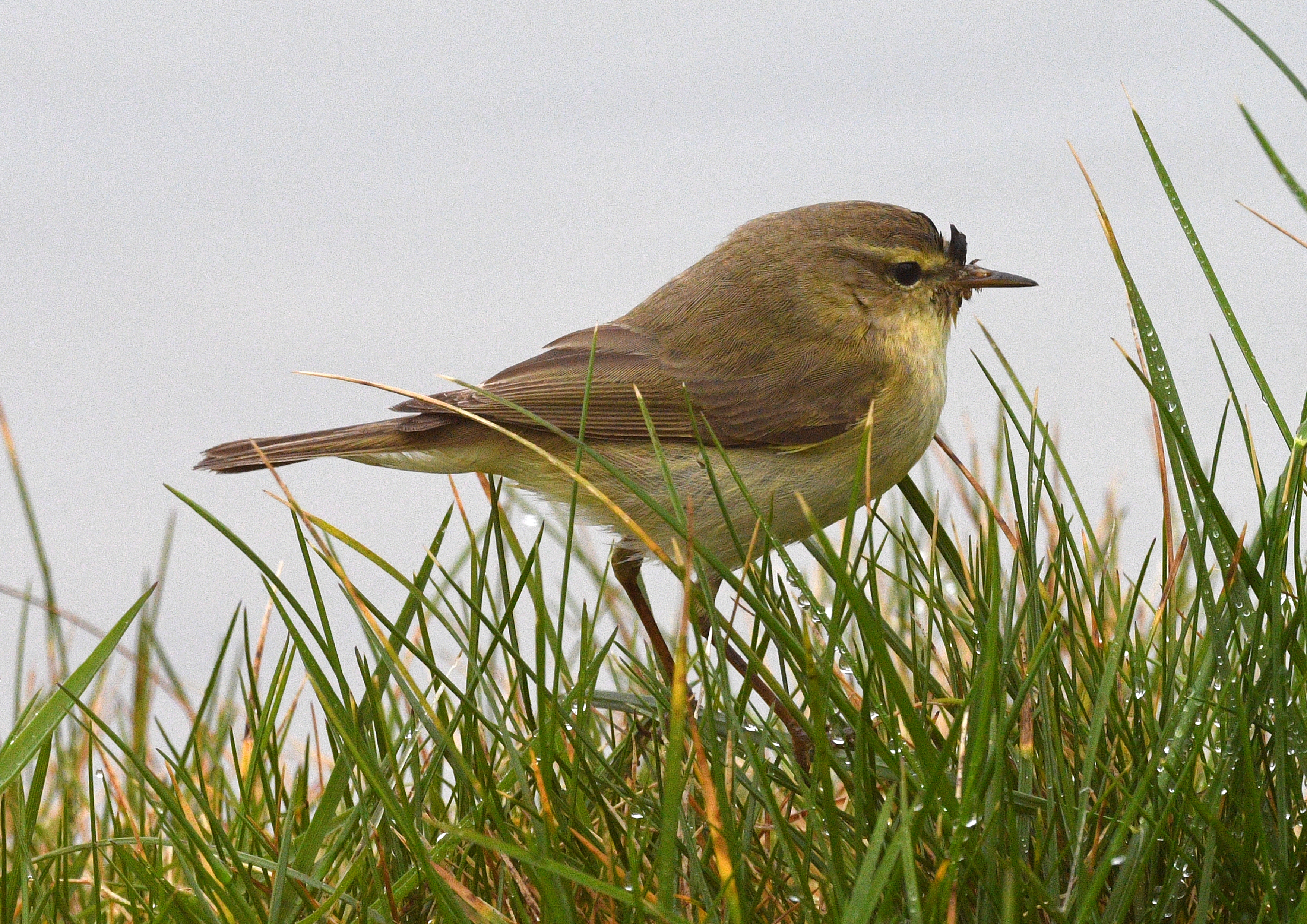
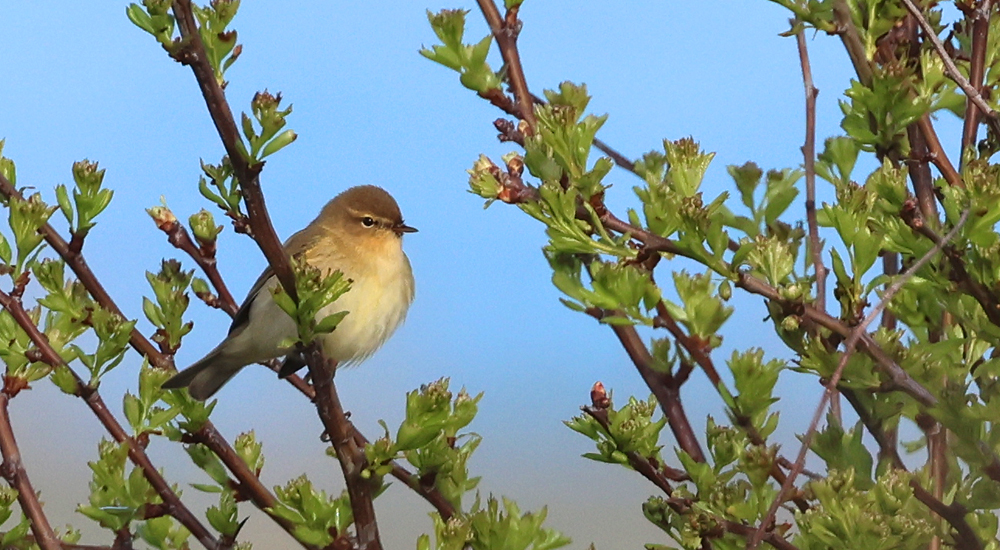
One of the day's Chiffchaffs enjoying the sunshine and warmth at the Bill © Geoff Orton:

Another routine capture of an already ringed bird - this Willow Warbler trapped at the Obs this morning was first marked as a departing youngster at a staging site on Salisbury Plain in August 2021 - gives us a chance to have a look at another of our recently compiled ringing recovery maps...

...not surprisingly, since they've been handled in greater numbers than anything else at Portland, we have a lot of Willow Warbler recoveries on our books, The map of these recoveries is one we need to work on to try and allow viewers to better see the wood for the trees as it's easy to miss amongst all the random migrant movements all sorts of other interesting facets - however, more on that another day © Martin Cade:

3rd April

Today could have gone either way - there's many a time in the past when a brisk, cold northeasterly under a crystal clear sky has dropped us a hatful of birds - but in the event if migrants were moving they didn't stop.  An Osprey over the centre of the island and a trickle of passing hirundines, Meadow Pipits and alba wagtails - including the first House Martins of the year - were just what might have been predicted given the conditions; sadly, the sparse spread on the ground didn't included more of interest than a couple of lingering Firecrests at the Bill and the continuing Cetti's Warbler at Suckthumb
The wind was too offshore for the sea during the morning but a favourable veer towards evening saw a little bit get moving off Chesil, including 36 Bar-tailed Godwits and singles of Red-throated Diver, Gadwall and Arctic Skua; 20 Sandwich Terns, 2 Red-throated Divers and the year's first commic tern were the best of the day's slim pickings off the Bill.

In perfect conditions and in what must be their peak spring week at Portland it was no surprise at all when this Osprey loomed into view over Weston Street © Mark Eggleton:

2nd April

Today was a real slow-burner with, very oddly for this time of year, more migration during the afternoon than at any time during the morning. With a light headwind and a heavily overcast sky dawn had actually looked more promising than any so far this spring, but what activity there was had a distinctly wintery flavour with multiples of Redwings, a Fieldfare and a Brambling all featuring in quick time before any summer migrants showed up. The latter were tardy indeed, with the main thrust of 50 each of Blackcap and Willow Warbler not showing up until after midday when the likes of Swallows also started to dribble through frequently if not numerously. At least 2 newcomers were amongst the half-dozen Firecrests at the Bill where a Yellowhammer was a noteworthy oddity; elsewhere, a Cetti's Warbler was new at Thumb Lane. The offshore breeze saw sea passage restricted to just 5 Red-throated Divers through off the Bill.

With just two island records last year and none at all during 2021 Yellowhammer is far from the nailed-on list-padder that it once was when the island hosted a decent breeding population, so today's passing male that took a short break in the treetops at the Obs was much appreciated © Martin Cade:


1st April

The start of the new month was a wee bit too influenced by the end of the old one, with the dregs of yesterday's fierce wind still a feature into the morning. Migrant numbers barely improved with 2 Firecrests - one a new arrival - the best of the low single figure totals of routine fare on the ground at the Bill; overhead, single Merlins passed through at Reap Lane and the Bill. Some limited sea movement included 130 Mediterranean Gulls and 21 Sandwich Terns through Ferrybridge and a Red-throated Diver passing the Bill.

31st March

There endeth another month, blown out - perhaps rather fittingly bearing in mind how this March has played out - by a 60mph gale and mountainous swells offshore. The only reports were of storm-blown seabirds: 16 Sandwich Terns, 12 Kittiwakes and 3 Little Gulls through Ferrybridge, 22 Fulmars, 4 Manx Shearwaters, 3 Red-throated Divers and a Sandwich Tern through off the Bill and a handful of grounded Lesser Black-backed Gulls everywhere. With no grounded passerine migrants at all reported from the Bill there was no last minute fillip to some pretty dreadful month totals; as an example, our average March ringing totals during the last five years for Blackcap, Willow Warbler and Chiffchaff have been 60, 21 and 240 respectively, this month's totals for those three species are 6, 5 and 98.

Two of the Little Gulls and a Sandwich Tern at Ferrybridge this morning © Pete Saunders:


30th March

A windy but often surprisingly pleasant day with it feeling quite warm in any shelter. The sea was always going to get most attention and always entertained even if the rewards were hardly spectacular. A good movement of 33 Red-throated Divers highlighted but gulls were always a feature, with a steady passage that included 215 Kittiwakes, 80 Common Gulls and 16 Mediterranean Gulls; standard fare for this date such as Common Scoters, Manx Shearwaters and Sandwich Terns all featured but not in worthwhile totals. The land was always hard going in the breeze, with 2 each of Black Redstart and Firecrest the best amongst the handful of Wheatears and phylloscs scattered on the ground at the Bill, where the odd few Swallows passed through overhead. Elsewhere, 25 Brent Geese and 8 Sandwich Terns passed through at Ferrybridge.

Red-throated Divers trundled through offshore all morning, with the majority now in top-notch summer plumage...


...Kittiwakes aside, most of the smaller gulls passing though like these Mediterranean Gulls are now in varying degrees of immature plumage


...however, there are still a few super-smart breeding plumage Common Gulls in the mix © Martin Cade:


Passerine migrants have been in such short supply that it's hardly surprising that this Chiffchaff from a couple of days ago is the first bird that we've handled this year that was bearing someone else's ring - in this case a relatively routine recovery since it was ringed last October in Leicestershire © Martin Cade:


However, its capture does enable us to draw attention to a project we've been engaged in for the last few weeks. It's long been our intention to pull together in one accessible place all of our ringing recoveries and to this end Jodie's been working on how best to present these and has begun to construct interactive maps for each species - the map is zoomable and clickable so give it a try:

29th March

Every cloud has a silver lining and today it was the manufacturers of trench foot remedies that will have done well out of our misfortune in having to endure most variations of dampness known to meteorology.  However, in between the all-enveloping fog that begun the day and the chucking rain that ended it there were enough spells of amelioration that migrants were uncovered, even if none featured in numbers. Firecrests included at least 6 scattered about the Bill and Southwell, a new Black Redstart showed up at the Bill and, as it often does, the rain also dropped wader newcomers in the form of 2 Sanderling, a Little Ringed Plover and a Grey Plover at Ferrybridge; commoner fare even included the odd passing Swallow. A total of 16 Red-throated Divers was a worthwhile return from a sea that was barely visible for long periods.

Singles of Rusty-dot Pearl and Dark Sword Grass made up the overnight migrant tally from the Obs moth-traps.

The new Black Redstart at the Bill © Clare Harrison:


We'd noticed in recent days a few social media postings featuring a ringed Wheatear in residence at Ferrybridge and yesterday Debby Saunders photographed it clearly enough to confirm that it's last year's bird returning there - the full story of this individual that fledged from a nest in the Bill Quarry in 2019 featured in one of our blog posts last March © Debby Saunders:

28th March

We start with the sad news of the passing of two of the very last links with the 'pre-Old Lower Lighthouse' era of Portland birding. Barry Mathews and David Godfrey, who both died last week, were two of the true pioneer Portland birders who'd been active right back into the 1950s when the potential of the island as a migration watchpoint was first being explored. Once the Obs as we know it today had been established and formerly recognised as an accredited bird observatory, both Barry and David served long and distinguished terms as committee members and trustees. Our sincere condolences go out to the families and friends of both Barry and David.

Damp and increasingly turbulent conditions saw the sea get most of the attention today. The rewards weren't exactly fulsome but the feeling was certainly of up-Channel passage gathering a bit of momentum, with 76 Common Scoter, 8 Red-throated Divers, 2 Arctic Skuas and singles of Little Egret, Teal and Caspian Gull through off the Bill and 6 Pintail and 2 different Arctic Skuas through off Chesil. The land did get some attention before the worst of the weather blew in, with 30 Chiffchaffs and several Wheatears and Goldcrests new at the Bill where at least 2 Firecrests lingered on.

Today's small movement of Common Scoter was hopefully the harbinger of things to come in the next few weeks. What we're guessing won't be featuring in this years Channel dash are Great Skuas: time-wise and weather-wise, today looked ideal for a pulse of Bonxies yet not a single one was logged which, taken together with their terrible showing last autumn and complete absence through the winter, suggests that avian flu really has ravaged their population © Martin Cade:


27th March

The improvements in our fortunes have been incremental at best in recent days but today's little uptick was enjoyable nonetheless. The frustration of the day was another subliminal but very likely Alpine Swift that afforded only bin-less views as it shot through over a birder's garden at Southwell. That aside, the spread of common migrants at the Bill included 30 Chiffchaffs, 20 Goldcrests, 10 Wheatears, 5 Firecrests, 3 Willow Warblers and singles of Short-eared Owl, White Wagtail and Brambling on the ground, with a trickle of Lesser Black-backed Gulls, hirundines, pipits and finches through overhead; elsewhere, the Hooded Crow hybrid reappeared, this time at Fancy's Farm. The breeze was a little too offshore to be of much use to the seawatchers, with 3 Shelducks, 2 Red-throated Divers and 2 Sandwich Terns the best on offer at the Bill and Chesil.

An unexpected flurry of migrant moths included singles of Dark Sword Grass and Pearly Underwing trapped overnight at the Obs and a Hummingbird Hawkmoth seen by day in the Obs garden.

Finally, a plea to visiting photographers for some restraint: the various showy Little Owls at the Bill are attracting photographers from far and wide and today, for the second times in recent weeks, a photographer has had to be turfed out from the floor of the Obs Quarry after being discovered right underneath the Little Owl breeding crevice - the birders who discovered him reported to us that he was quite belligerent and reluctant to leave. Quite apart from blatantly ignoring our large warning/prohibition notice, the behaviour of these miscreants risks causing the owls to desert the site and spoiling everyone else's enjoyment of them. In addition to these difficulties at the Obs Quarry it's not been lost on us that several of the recently published photographs on social media of the other well-known Little Owls on East Cliffs at the Bill show one or other of the pair in flight - presumably after they've been flushed by too close an approach; it really would be sensible if photographers also left this pair of owls well alone during the breeding season.


26th March

Better today although without being in any way as rewarding as it could/should be at this juncture: there seems to be an awful lot of migrants that aren't showing up at all considerably later than they'd usually be expected in quantity - where are all the Meadow Pipits that should have been flooding through on a day like today? Today's quieter conditions after a night of heavy rain looked more promising and although variety wasn't too bad numbers were pretty paltry, with only single figure tallies of Wheatear, Blackcap and Willow Warbler at the Bill; Chiffchaffs fared a little better, with perhaps 40 at the Bill, where 2 Goldcrests and a Firecrest were new (the latter joining 2 additional long-stayers), with a further Firecrest at Reap Lane and 2 Grey Plovers at Ferrybridge. Visible passage was close to non-existent, with a single party of 75 Wood Pigeons through over the Grove and a Common Buzzard through over Portland Harbour but no more than a barely perceivable trickle of alba wagtails and Meadow Pipits through over the Bill. Three Red-throated Divers and 2 Manx Shearwaters accounted for what little sea passage there was at the Bill.

Today's Grey Plovers at Ferrybridge and yesterday's White Wagtails at Southwell © Pete Saunders:


We've always got time for a freak of nature and today's new Great Tit trapped at the Obs fitted the bill perfectly - it's clearly not leucistic or of the 'brown' aberration but we haven't read van Grouw (2006) in enough detail to work out whether its peculiar plumage is the result of a mutation or some sort of non-heritable dietary/condition issue. The odd new tits are regular captures throughout March and, although ringing recovery confirmation is sadly lacking, we wouldn't mind betting that most like today's bird are relatively long distance migrants that wintered well away from here and are returning to quite distant natal areas © Martin Cade:


25th March

Still only low single figure totals of common migrants to show for today's efforts but odd morsels of quality amongst them included 3 Firecrests, 2 White Wagtails and a Ring Ouzel dotted about the south of the island; winters still on show included 3 Purple Sandpipers and a Black Redstart. Eight Red-throated Divers passed through off the Bill where the 25 wintering Common Scoter were still in residence.

24th March

Migration really has ground to the halt, with today's continuing and always freshening southwesterlies doing absolutely nothing for us. Almost nothing amongst the handful of migrants on the ground looked to be new in, with singles of Black Redstart and Firecrest the only worthwhiles at the Bill. Three Red-throated Divers and a small passage of Kittiwakes passed by on the sea there.

23rd March

With a blustery morning following an intermittently wet night and the second half of the day knocked out by a substantial band of rain rolling in off the Channel, today was always going to have to go some to set pulses racing and it scarcely even tried. Migrant numbers were pitifully low and looked to consist mostly of lingerers, with single Firecrests at the Obs and Avalanche Road the only ones of note. Eight Red-throated Divers and 3 Manx Shearwaters could just about be made out through the continuing curtain of salt-spray at the Bill.

22nd March

Despite uninspiring conditions - overnight wind and rain that didn't look to have been very helpful on the migration front and left of a legacy of a very rough sea and copious amounts of opaque salt-spray that made seawatching a non-starter - the day was salvaged by the likes of the spring's first Ring Ouzel at the Verne and a continuing presence of half-a-dozen or more Firecrests around the south of the island. New arrivals weren't at all plentiful but with a bit of looking a fair spread of Wheatears, Blackcaps and Chiffchaffs were revealed, amongst which singles of White Wagtail at Reap Lane and Grey Plover at Ferrybridge were of interest. Seven passing Red-throated Divers accounted for pretty well all the sea interest at the Bill.

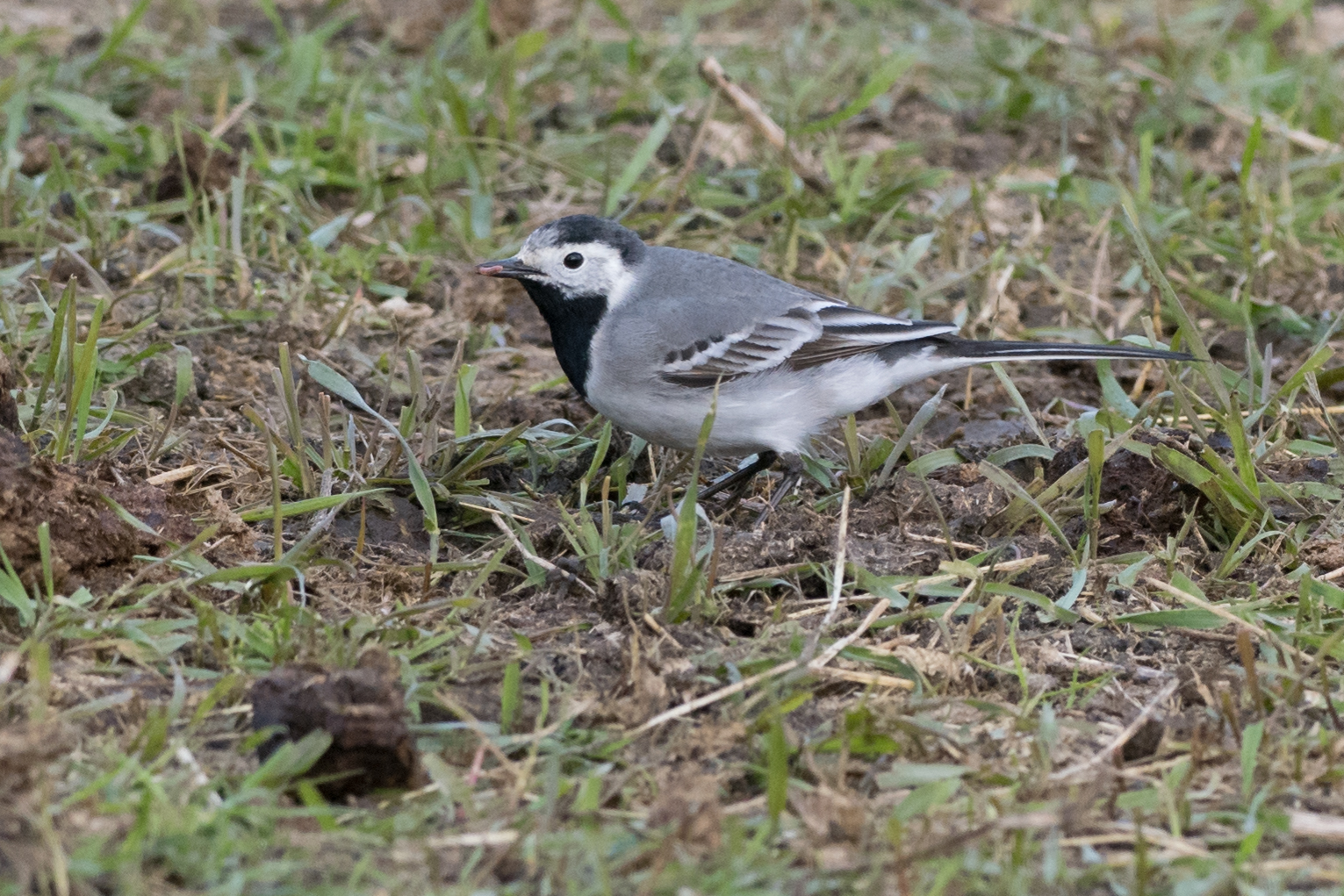
It doesn't take hungry migrants long to find some of the less salubrious - but for them richly rewarding - venues on the island: this White Wagtail was making itself at home on the veritable manure mountain at Reap Lane © Martin Cade:


An oft remarked-on component of the local breeding population of Rock Pipits are these pseudo-littoralis individuals; we're not sure if it's always the case but many with this look seem to be males - since it was song-flighting and engaged in all sorts of courtship pursuits with its mate this individual we watched this morning was pretty obviously a male. At this time of year the white supercilium, greyish cast to the head and mantle, and pinkish flush to the underparts certainly invite confusion with littoralis, even if their presence as breeding birds here should make them petrosus © Martin Cade:


21st March

Barring a likely Alpine Swift that flew in off the sea at the Bill but couldn't quite be clinched by its sole observer the day again belonged to Firecrests, with at least 5 at the Bill and 4 at Avalanche Road. Other migrants didn't fare too badly, with overnight rain dropping totals of 40 Chiffchaffs, 25 Wheatears, 4 Blackcaps, the season's first Willow Warbler and other singles of Merlin, White Wagtail and Goldcrest at the Bill, along with a good few more of the same elsewhere. The sea belonged to Red-throated Divers, with a decent passage of 35 through off the Bill; considering their good showing more might have been expected from other early movers, but in the event 14 Brent Geese, a trickle of Common Scoter and Kittiwakes, 3 Manx Shearwaters and the first Puffin of the year was all that could be mustered at the Bill.

It looks like there'll be another Barn Owl breeding attempt this year in the traditional spot at the Verne Moat © Andy Luckhurst:


20th March

Wot, still no Alpine Swift? - although fieldwork was severely curtailed by some pretty grim damp and dreary conditions there was still a fair bit of legwork put in traipsing around many a suitable swift location but all to no avail. What was in evidence included a nice little arrival of Firecrests - at least 8 scattered between the Obs and Reap Lane - amongst a good drop of Chiffchaffs. Rather oddly, other grounded migrants looked to be poorly represented with no more than a single figure total of Wheatears at the Bill, where 2 Fieldfares were of minor note; elsewhere, a Black Redstart was at Weston. In some of the few periods of better visibility 2 Red-throated Divers passed through off the Bill.

With flying insects at a premium, many of the Chiffchaffs were reduced to scratching about on the ground for sustenance © Nick Stantiford:


...whilst the normally dapper Firecrests were but bedraggled shadows of their usual dazzling selves - although even in reduced circumstances they lent some welcome colour to the day's otherwise uniform drabness © Martin Cade:

19th March

What proved to be lovely conditions for a Mother's Day drive to Portland for a Cream Tea weren't ever likely to be much cop for those travelling to the island hoping to tap into some early migrants and so it came to pass that today's sunny skies were the undoing of the birders. Two Red Kites did get aloft and strayed all the way out to the Bill but the migrant tally there otherwise consisted of little more than 23 Wheatears, 10 Chiffchaffs and 3 Firecrests on the ground and 2 Sand Martins and a few pipits and wagtails passing overhead; what we must have missed after it all passed overhead without stopping during the hours of darkness was hinted at by the decent tally of 166 Redwing calls logged overnight by the Obs nocmig recorder. Three Red-throated Divers and a lone Manx Shearwater were all that the seawatchers could muster off the Bill.

Once a highly sought-after rare migrant at Portland, Red Kite has been massively devalued by the dumping of umpteen of them all over the British countryside; however, they actually remain surprisingly infrequent on the island, with most of the wanderings of the introduced population being confined to the mainland © Martin Cade:


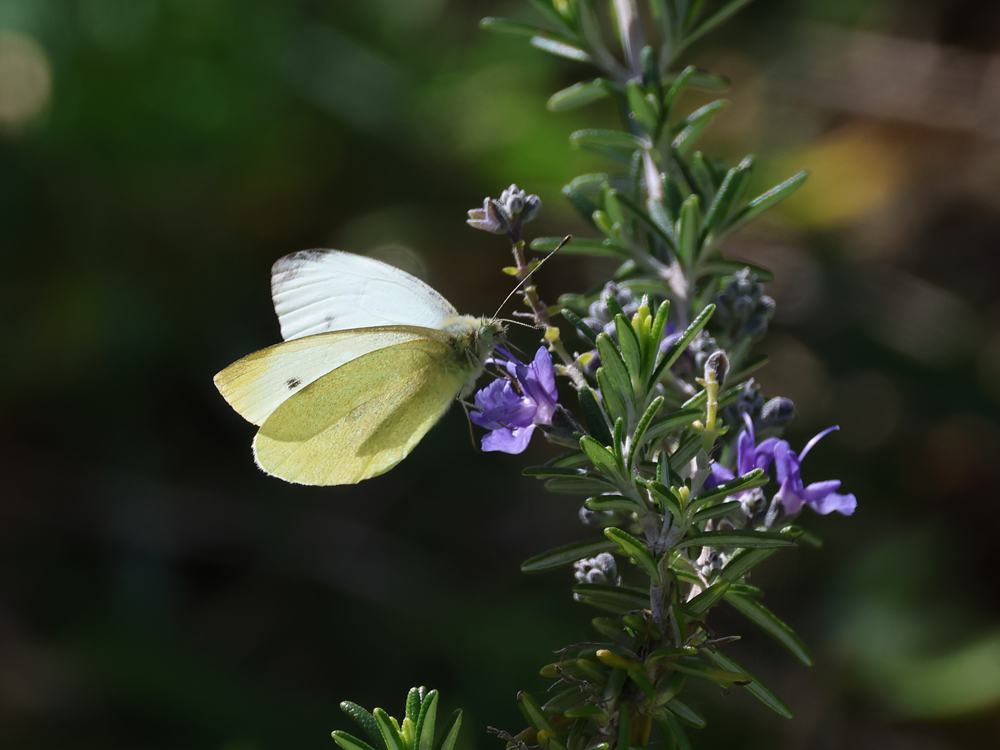
Small White was on the wing for the first time this year © Martin Cade...


...whilst after their being reduced to considerable infrequency in recent years it's nice that two of the few butterflies seen in recent days have been Small Tortoiseshells © Steve Mansfield:

18th March

A reduced post tonight via the phone app whilst we try and fix a desktop computer issue. 
An underwhelming day that saw the migration momentum of the latter half of the week evaporate despite not too shoddy-looking conditions: a murky dawn followed some overnight rain and by mid-morning  really warm sunshine had broken through. The migrant tally dipped conspicuously with no more than a handful of Wheatears and Chiffchaffs in evidence and nothing much better than 4 Long-tailed Tits, 2 each of Water Rail, Black Redstart and Firecrest, and the lingering Hooded Crow hybrid by way of scarcities at the Bill. Visible migrants hardly featured although an Osprey north at the Bill got a mention on the national news services (if anyone knows the details of this sighting please let us know). Seawatching was hampered by reduced visibility with a passing Teal the only oddity off the Bill. The only other reports concerned an early Whimbrel and the the 4 lingering Eider in Portland Harbour.

17th March

The continuing waft of southerlies did us no harm again today with the first decent push of Chiffchaffs bringing forth a well into three figure total for the island as a whole; Wheatears were also well represented, with 50 spread around the Bill, whilst amongst the lesser numbers at least 3 Firecrests were new today. Five passing Garganey were a first for the year off the Bill where the first sign of concerted up-Channel passage of Common Scoter saw 43 logged.

The first Small Tortoiseshell of the year was on the wing at Church Ope Cove and a lone Dark Sword Grass provided some migrant interest in the Obs moth-traps.


Hawthorn leaves bursting, pollened Chiffchaffs fresh in, a blue sky - everything's good © Martin Cade:


16th March

Plenty of positives again today, with the southerly airflow seeing migrants arrive in decent numbers throughout the south of the island. The constituent parts were much as they should in mid-March, with Wheatear, Stonechat and Chiffchaff accumulating totals of c50, 38 and c20 respectively between the Bill and Weston; Goldcrest and Blackcap were both firsts for the season, with at least 4 of the former and a single of the latter dotted about, whilst the 3 Firecrests logged included 2 new arrivals at Southwell. It was a bit too murky for visible passage to really get going but alba wagtails in particular looked/sounded to be trickling through all day. The sea was again disappointing, with little more than 7 Red-throated Divers, 5 Curlew, 2 Brent Geese and a Grey Plover through off the Bill along with a very light passage of routine gulls.

Tiny but perfectly formed - it's always good to see Goldcrests on the move © Martin Cade:


A good proportion of the Red-throated Divers were in nice summer plumage but the only one that came within camera range for us still wasn't fully coloured-up...


...the Curlews obliged by passing right underneath us at the Bill © Martin Cade:


15th March


The Alpine Swifts still weren't flying for us but in most other respects the outlook suddenly looked a lot rosier as a little flurry of early migrants hinted at passage at last gathering some momentum. Wheatear was the feature bird of the day with a good 50 at the Bill and a likely three figure total for the island as a whole; an overflying Iceland Gull provided some overdue quality at the Bill, where 2 Black Redstarts, 2 Firecrests and a handful of Chiffchaffs were scattered on the ground. Visible passage was far from heavy but did include amongst the trickle of Meadow Pipits and alba wagtails singles of Skylark, Sand Martin and Brambling at the Bill and a Bullfinch at Easton. Despite a promising waft of southeastly the sea was the poor relation with little more than 10 Red-throated Divers through off the Bill; additionally, several Sandwich Terns were dotted about Portland Harbour and Ferrybridge, and the 4 Eider were still in residence at the former.

14th March

Today's dreamy expectation: skeins of Alpine Swifts coursing through overhead; today's brutal reality: singles of Wheatear, Chiffchaff and Firecrest. The season's first Wheatear was much appreciated but the pitifully inadequate selection of back-ups included just the Firecrest of note on the ground, whilst the clear, sunny sky overhead was seemingly bereft of action - where were all the Meadow Pipits, alba wagtails, Linnets and the like that should have been taking advantage of the huge improvement in conditions? The Hooded Crow hybrid was still on show at the Bill, single Black Redstarts were still about the Bill and Southwell, and the 4 Eider were still in Portland Harbour.

After ten months of seeing scabbily-plumaged birds or none at all the sight of a spring male Wheatear is certainly something for sore eyes © Phil Cheeseman:

13th March

A sea day - not that the fierce gale that blew in overnight actually delivered much for those that took the trouble to look. Gull passage continued with 100 Black-headed Gulls through off Chesil and trickles of Kittiwakes, Common Gulls and Lesser Black-backs everywhere. Additionally, single Manx Shearwaters passed by off the Bill and Chesil, a Sandwich Tern was in Chesil Cove, 2 Pale-bellied Brent Geese were over Ferrybridge and Portland Harbour, and 5 Golden Plovers passed the Bill. The land was far too blown out to permit any meaningful migrant hunting.

Kittiwake and Pale-bellied Brent Geese through at Ferrybridge this morning © Joe Stockwell: